

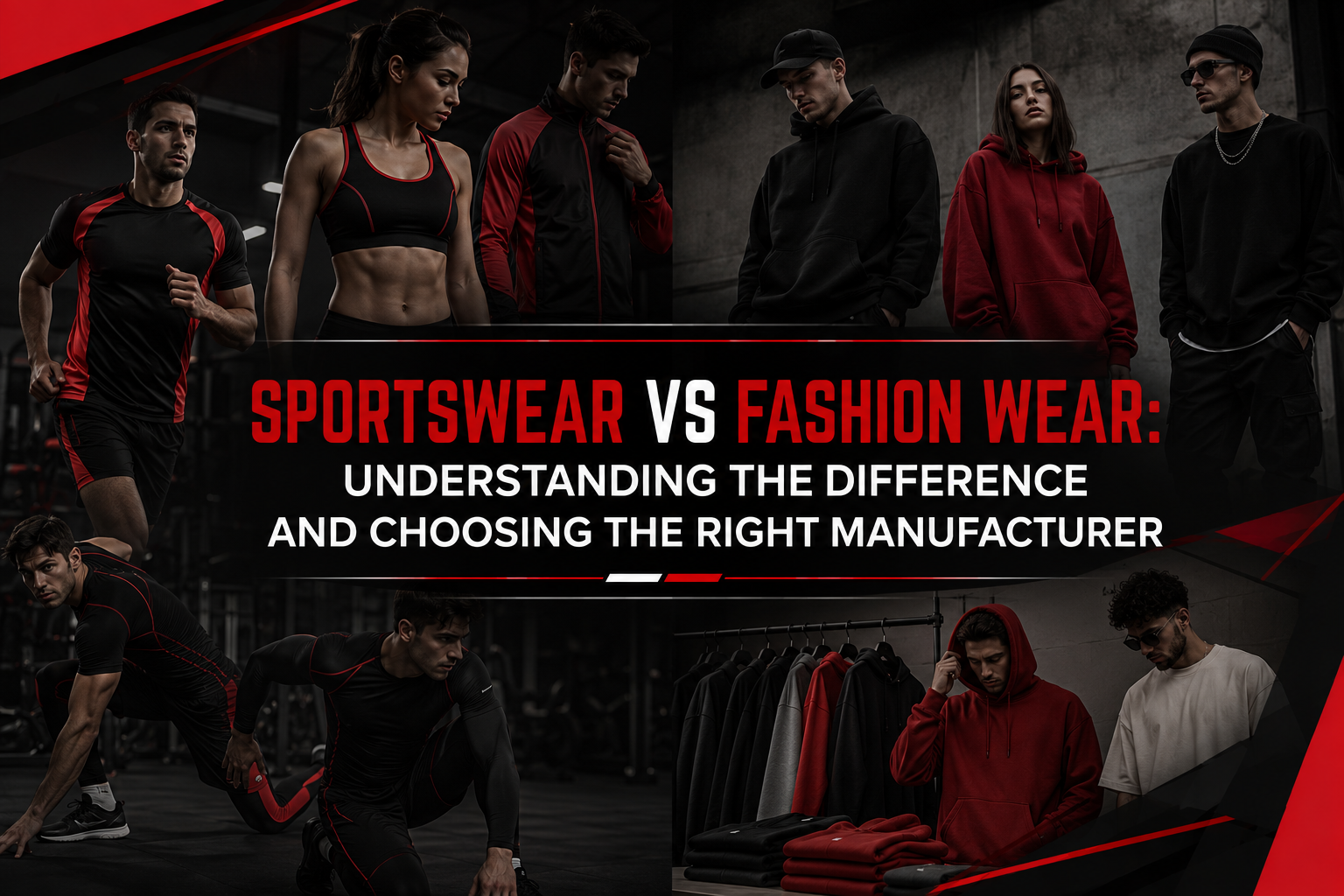
Sportswear and fashion wear are two major categories within the apparel industry. Although both require high-quality manufacturing, their design priorities, fabrics, construction, and performance requirements can be very different.
For brands entering the clothing industry, understanding these differences can make it easier to choose the right manufacturing partner and develop better products.
What Is Sportswear?
Sportswear is clothing designed for physical activity, training, sports, or active lifestyles.
Its primary purpose is to provide comfort and functionality while allowing the wearer to move freely.
Common sportswear products include:
- Sports jerseys
- Training shirts
- Shorts
- Tracksuits
- Compression wear
- Team uniforms
- Athletic jackets
- Performance tops
- Training pants
Sportswear manufacturers typically focus on factors such as flexibility, breathability, durability, weight, and moisture management.
What Is Fashion Wear?
Fashion wear focuses more heavily on style, appearance, comfort, and current trends.
Fashion apparel can include everyday clothing, streetwear, casual wear, contemporary collections, and lifestyle garments.
Examples include:
- T-shirts
- Hoodies
- Sweatshirts
- Joggers
- Casual jackets
- Streetwear
- Fashion tops
- Lifestyle apparel
While fashion wear may not require the same performance characteristics as athletic clothing, quality construction and material selection remain important.
Fabric Selection Is Different
One of the biggest differences between sportswear and fashion wear is fabric selection.
Sportswear often requires lightweight and functional materials that can support physical movement and active use.
Fashion wear may use cotton, fleece, blends, heavier fabrics, or other materials depending on the design and season.
The right fabric should always be selected based on the purpose of the garment.
Sportswear Requires Performance
When manufacturing sportswear, the garment must work with the athlete.
A good sportswear product should allow freedom of movement and provide comfort during activity.
For example, sports jerseys may need breathable construction, while compression garments require fabrics with appropriate stretch and recovery.
Sportswear manufacturers therefore need to understand both apparel construction and the requirements of athletic activity.
Fashion Wear Requires Strong Visual Appeal
Fashion products are often judged heavily on appearance.
Consumers may pay attention to:
- Fit
- Color
- Fabric texture
- Graphics
- Silhouette
- Stitching
- Details
- Finishing
For fashion brands, manufacturing consistency is especially important because customers expect products within the same collection to maintain a similar quality and appearance.
Custom Manufacturing Connects Both Categories
Modern brands increasingly combine sports-inspired designs with fashion.
This has created opportunities for manufacturers capable of producing both sportswear and lifestyle apparel.
For example, a brand may create a collection containing performance jerseys, oversized T-shirts, hoodies, joggers, and jackets.
Having one manufacturing partner capable of handling different apparel categories can simplify production and communication.
Why OEM Manufacturing Is Useful
OEM manufacturing allows brands to develop products according to their own requirements.
Instead of selecting a standard product from a catalog, brands can specify:
- Design
- Fabric
- Color
- Fit
- Measurements
- Branding
- Labels
- Packaging
This is particularly useful for businesses that want their products to have a distinct identity.
Private Label for Growing Apparel Brands
Private-label manufacturing is another option for businesses that want to sell apparel under their own brand.
Manufacturers can produce garments according to agreed specifications while the brand handles marketing, sales, and customer relationships.
This allows businesses to focus on building their brand without necessarily establishing their own manufacturing facility.
Bulk Production and Consistency
Once samples have been approved, bulk production becomes the next major stage.
The manufacturer must reproduce the approved design consistently across the entire order.
Important factors include:
- Same fabric quality
- Accurate colors
- Consistent sizing
- Correct branding
- Reliable stitching
- Proper finishing
- Appropriate packaging
Consistency is particularly important when products are being sold internationally.
Why Choose a Manufacturer That Handles Both
Working with a manufacturer experienced in both sportswear and fashion wear can give brands greater flexibility.
Instead of searching for separate suppliers for athletic and lifestyle products, businesses can potentially manage different collections through one manufacturing relationship.
Lightspeeds Industry specializes in both sportswear and fashion wear manufacturing, offering custom production solutions for brands and businesses.
How to Choose the Right Product Category
Ask yourself:
Is the product primarily designed for athletic performance?
If yes, sportswear manufacturing requirements should be prioritized.
Is the product primarily focused on everyday style and lifestyle use?
Fashion wear manufacturing may be more appropriate.
Does the collection combine both?
Look for a manufacturer with experience across both categories.
Final Thoughts
Sportswear and fashion wear may share the same basic manufacturing foundation, but their requirements can differ significantly.
Sportswear emphasizes performance, comfort, flexibility, and durability, while fashion wear places greater emphasis on style, fit, appearance, and trends.
For brands looking to develop products across both categories, choosing an experienced manufacturer can make the entire process more efficient.
Lightspeeds Industry provides custom manufacturing, OEM, private-label, and bulk production solutions across sportswear and fashion wear for clients worldwide.