
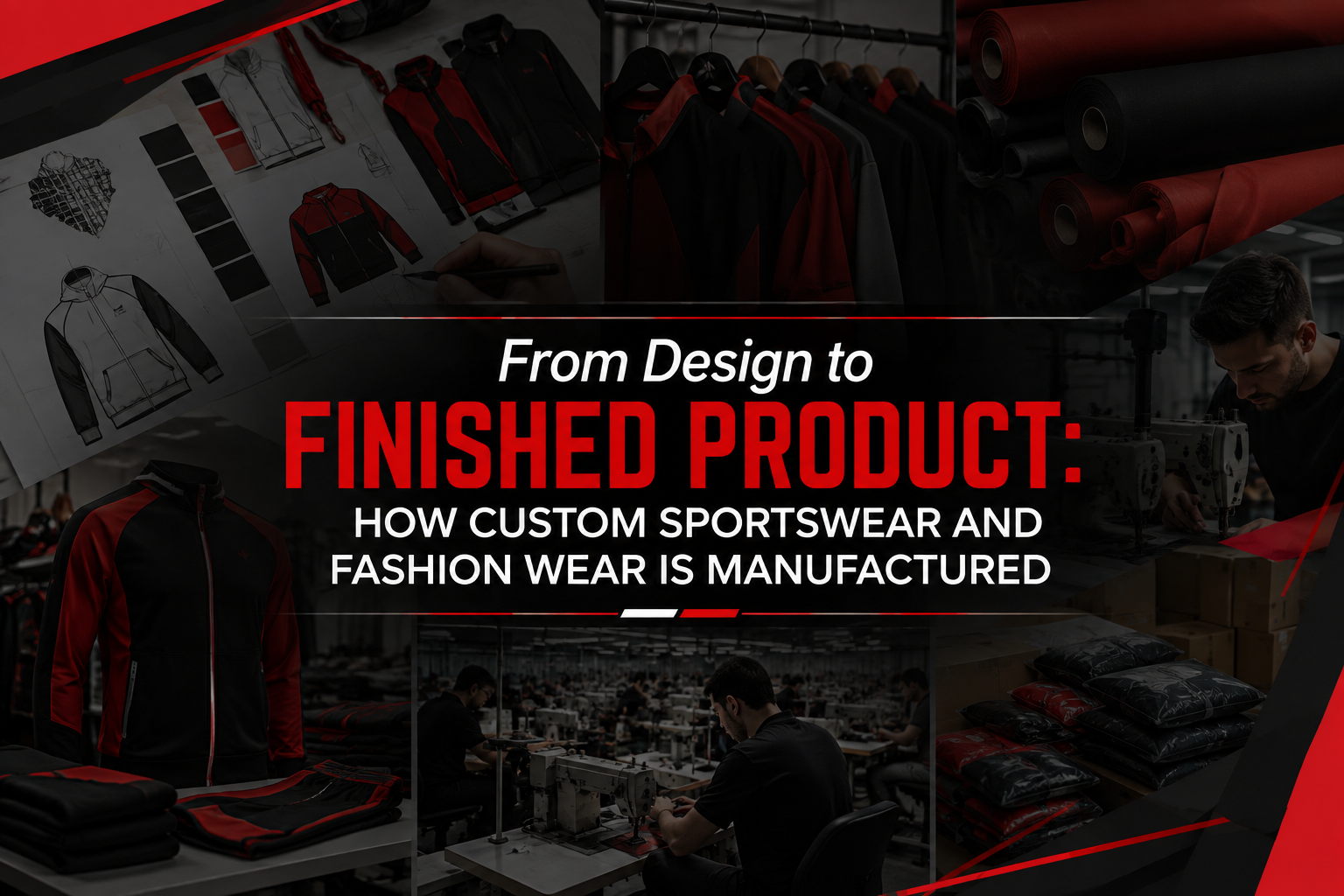
A finished piece of clothing may look simple, but professional apparel manufacturing involves multiple stages.
From the initial design concept to fabric selection, sampling, cutting, stitching, finishing, quality inspection, and packaging, every stage contributes to the final product.
Understanding the manufacturing process can help brands communicate more effectively with their suppliers and make better production decisions.
Design and Product Development
Every apparel product begins with an idea.
The brand may provide a finished design, technical drawing, reference product, specification sheet, or simple concept.
At this stage, important details are established, including:
- Garment style
- Fit
- Colors
- Fabric
- Measurements
- Branding
- Graphics
- Stitching details
- Accessories
- Packaging requirements
The clearer the specifications, the easier it becomes to develop an accurate product.
Fabric Selection
Once the product requirements are established, the appropriate fabric needs to be selected.
Sportswear may require performance-focused fabrics, while fashion wear may require materials selected for comfort, appearance, weight, or texture.
Fabric selection can influence:
- Product performance
- Comfort
- Appearance
- Durability
- Cost
- Final weight
- Production requirements
A professional manufacturer should help brands select materials suitable for the intended product.
Pattern Development
The next stage involves creating the garment pattern.
Patterns determine how individual pieces of fabric will be cut and assembled.
Accurate patterns are essential because even small measurement errors can affect the final fit.
For custom apparel, patterns may be developed according to the brand’s size specifications.
Sampling
Before starting bulk production, manufacturers generally create samples.
Sampling gives the brand an opportunity to evaluate the product.
The sample can be checked for:
- Fit
- Measurements
- Fabric
- Color
- Stitching
- Graphics
- Branding
- Overall appearance
If changes are required, revisions can be made before bulk production begins.
Branding and Customization
Brand identity is an important part of custom apparel.
Depending on the product, customization may include:
- Embroidery
- Screen printing
- Heat transfer
- Sublimation
- Woven labels
- Printed labels
- Custom tags
- Packaging
The appropriate branding method depends on the fabric, design, product type, and desired appearance.
Fabric Cutting
After the design and sample are approved, production can move into cutting.
Fabric is prepared and cut according to the approved patterns.
Accurate cutting is important because each component needs to match the required dimensions.
Poor cutting can lead to inconsistent garments and material waste.
Stitching and Garment Assembly
The cut fabric pieces are then assembled.
Different parts of the garment are joined through industrial sewing processes.
Depending on the product, this may involve multiple operations.
For example, a sportswear garment may require separate operations for:
- Sleeves
- Side seams
- Neckline
- Waistband
- Pockets
- Cuffs
- Panels
Professional workmanship at this stage contributes significantly to garment durability and appearance.
Finishing
After the garment has been assembled, finishing operations are performed.
This may include trimming loose threads, checking seams, pressing garments, attaching labels, and preparing products for final inspection.
Finishing gives the product a cleaner and more professional appearance.
Quality Control
Quality control is one of the most important stages of apparel manufacturing.
The finished products should be inspected against the approved specifications.
Quality checks may include:
- Measurements
- Stitching
- Fabric defects
- Color consistency
- Printing
- Embroidery
- Labels
- Finishing
- Overall appearance
Identifying problems before shipping helps reduce customer complaints and returns.
Packaging
After final inspection, products are prepared for packaging.
Packaging requirements can vary depending on the brand.
Some brands may require individual poly bags, custom labels, size stickers, cartons, or other packaging specifications.
Proper packaging helps protect garments during storage and transportation.
Preparing for Global Export
For international clients, production does not end when the garments are packed.
Products may need to be organized and prepared according to shipping requirements.
Export-oriented manufacturers need to understand the importance of accurate quantities, documentation, packaging, and delivery coordination.
Why Communication Matters Throughout Manufacturing
Communication between the brand and manufacturer is important from beginning to end.
A successful production process depends on clear information regarding:
Design → Fabric → Measurements → Branding → Sample → Approval → Production → Quality Control → Packaging
When specifications are unclear, problems can occur at different stages.
Building a Long-Term Manufacturing Relationship
A successful apparel brand needs more than a single production order.
Long-term manufacturing relationships can help suppliers understand a brand’s preferences and quality expectations.
Over time, communication can become more efficient, product development can become smoother, and production planning can improve.
Lightspeeds Industry: Custom Sportswear and Fashion Wear Manufacturing
Lightspeeds Industry is based in Sialkot, Pakistan, and specializes in custom sportswear and fashion wear manufacturing.
We work with brands, businesses, sports teams, and organizations to develop apparel according to their requirements.
Our manufacturing solutions include:
- Custom apparel
- Sportswear manufacturing
- Fashion wear manufacturing
- OEM production
- Private-label manufacturing
- Bulk production
Our approach focuses on quality, precision, responsible production, professional workmanship, and long-term partnerships.
Final Thoughts
Professional apparel manufacturing involves much more than sewing fabric together. Every stage—from product development and fabric selection to sampling, production, finishing, and quality control—plays an important role in the final result.
For brands looking for a manufacturing partner, understanding this process can make communication easier and help establish realistic expectations.
With its focus on sportswear, fashion wear, OEM, private label, and bulk production, Lightspeeds Industry aims to help brands turn their apparel concepts into finished products ready for markets around the world.